Costume Guide
Lab coat, orange hair, square glasses, purple gloves — the boy genius from Cartoon Network, seven pieces away.
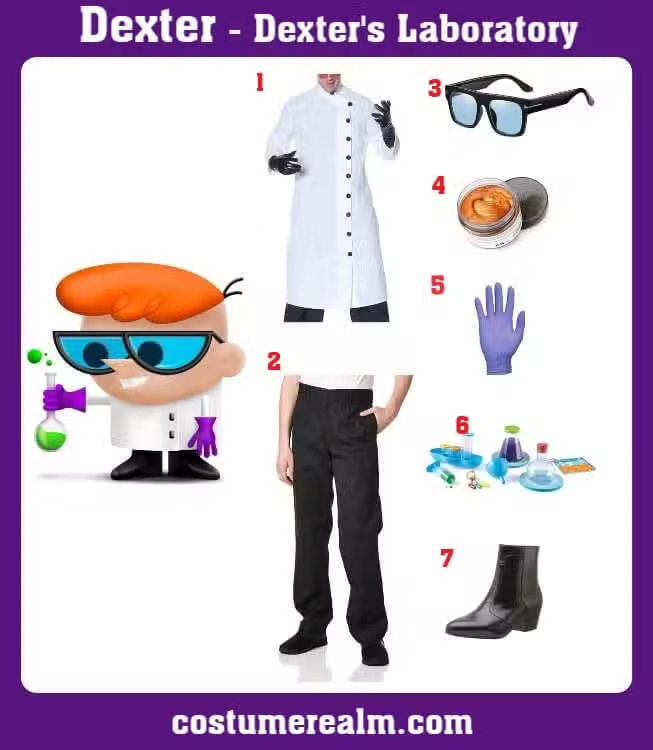
Quick Answer: To dress like Dexter, apply the orange hair wax dye and style the hair upward. Put on the black work pants and pointed-toe dress boots, then put on the long white lab coat. Add the square blue-tinted sunglasses and the purple exam gloves. Carry the water lab science kit as a prop. With the orange hair, square glasses, white lab coat, and purple gloves all in place, the Dexter costume is immediately identifiable.
Dexter is the boy genius protagonist of Dexter’s Laboratory, the Cartoon Network series created by Genndy Tartakovsky that ran from 1996 to 2003. Hidden behind his bedroom bookshelf is a colossal secret laboratory packed with inventions, robots, and experiments — a world his parents never discover and his sister Dee Dee never stops invading. His visual identity is one of the most distinctive in 1990s animation: the bright orange hair, the oversized square glasses with blue lenses, the white lab coat, and the purple gloves combine into a look immediately recognisable to anyone who grew up watching Cartoon Network. A classic scientist costume that communicates both the specific character and the broader archetype with equal force.
Affiliate links — we may earn a small commission at no extra cost to you.
Start with the hair — the orange hair wax dye should be applied to dry hair before any clothing is put on to avoid transfer onto the lab coat. Work the wax dye through the hair evenly for full, saturated orange coverage, then style upward to approximate Dexter’s animated hairstyle. The animated character has a rounded, slightly side-parted hairstyle that sits fairly close to the head — aim for general upward volume rather than a specific sculpted shape. The bright orange colour does the recognition work; the exact style is secondary. Allow the wax to set slightly before putting on the lab coat.
Put on the black work pants first, then the pointed-toe black dress boots. Put on a dark or white undershirt, then put on the long white lab coat over it. The lab coat should reach at least to the knee and be fastened with all buttons — Dexter’s coat is always worn completely closed and formal, never open or relaxed. Put on the purple exam gloves — these go on over the coat sleeves in the animated character’s appearance, visible at the cuffs. Put on the square blue-tinted sunglasses last. With the orange hair, square glasses, white lab coat buttoned closed, and purple gloves all in place, the Dexter costume is complete and immediately recognisable. Carry the water lab science kit in one hand for the most in-character photo pose.
The Orange Hair — Most Important Detail
The orange hair is one of the two most important recognition elements of the Dexter costume alongside the square glasses. The colour should be bright and vivid — not auburn or copper, but a saturated cartoon orange. Apply the wax dye generously and work it through fully for even coverage. Style the hair upward and slightly rounded at the top to approximate the animated character’s silhouette. The wax dye holds styling without additional product and washes out easily with shampoo after the event.
The Square Glasses
The oversized square frames with blue-tinted lenses are the single most distinctive element of Dexter’s design and the detail that most immediately identifies the specific character versus a generic scientist costume. The frames should be thick, black, and large — the exaggerated scale of the glasses is part of the visual joke of the character’s design. Blue-tinted or blue-grey lens tints are the most accurate option. With the orange hair and square glasses both in place, the costume is immediately recognisable even without the lab coat.
The Purple Gloves
The purple exam gloves are the detail that distinguishes a Dexter costume from a generic lab scientist costume. Purple is the specific colour of Dexter’s gloves in the animated series — not blue, not white, not black. Purple latex exam gloves are widely available in most sizes. Wear them over the coat sleeves so they are visible at the cuffs, which is how they appear in the animated character’s design. The purple gloves add an immediately recognisable character-specific element at extremely low cost.
The Lab Coat
The long white lab coat should be worn completely buttoned — Dexter’s coat is always worn formally closed, never open or draped. The length should reach at or below the knee to match the character’s silhouette, which features a coat that appears disproportionately long relative to his small animated stature. In the context of a costume where the wearer is full height, a longer lab coat reads most accurately. A coat with a stand collar or Mandarin collar most closely matches the animated design.
The Science Kit Prop
The water lab science kit is the ideal prop for the Dexter costume — a set of colourful beakers, flasks, and chemistry equipment that immediately communicates the laboratory context of the character. Carry it in one hand while wearing the full costume for the most in-character photos. The prop adds visual interest and a natural interaction element for posed photographs — hold a beaker as if examining its contents for the most direct reference to Dexter’s constant lab experiments.
Character Mannerisms
Dexter speaks with a vaguely Eastern European accent in the animated series — an affectation the creators added without a specific national origin, giving the character a slightly formal, grandiose quality in his speech. For costume events, adopting slightly formal, overly technical language and referring to everything as an experiment adds character depth. The most recognisable Dexter catchphrase is his exasperated “Dee Dee!” — useful for photo moments and easily understood by anyone who watched the show.
Same Show Group
The core family trio from Dexter’s Laboratory — Dexter’s meticulous scientist opposite his chaotic, ballet-dancing older sister Dee Dee, with their cheerful, oblivious mother completing the household. The dynamic between Dexter and Dee Dee is the central comedic engine of the series: his desperate attempts to maintain order in the lab constantly undone by her exuberant destructiveness. A trio that communicates the specific show immediately and provides strong visual contrast between the lab coat scientist and the two female characters in their distinctive animated styles.
Cartoon Scientists Group
Three of animated television’s most memorable scientist characters across three very different registers — Dexter’s boy genius earnestness, Rick Sanchez’s nihilistic interdimensional brilliance from Rick and Morty, and Professor Farnsworth’s ancient, eccentric incompetence from Futurama. Three white-coat scientists from three different eras of adult and children’s animation, each representing a distinct comedic take on the mad scientist archetype. A group that rewards pop culture literacy across animation history and generates strong recognition from fans of any of the three shows.
Kid Cartoon Heroes Group
Three beloved animated child protagonists from three defining cartoon eras — Dexter’s 1990s Cartoon Network boy genius, Finn the Human’s Adventure Time heroic adventurer, and Morty Smith’s reluctant sci-fi companion from Rick and Morty. Three very different archetypes of the animated young male lead: the scientist, the warrior, and the ordinary kid pulled into extraordinary situations. A group that spans the full history of prestige animation and generates recognition across multiple generations of cartoon viewers.
Cartoon Builders & Helpers Group
Three animated characters defined by creation, building, and problem-solving — Dexter’s secret laboratory genius, Bob the Builder’s cheerful construction mastery, and Ryder’s leadership of the PAW Patrol rescue team. Three characters from different generations of children’s animation united by the theme of competent, enthusiastic making and helping. A group with broad recognition across different age groups and a strong visual variety: the lab coat scientist, the builder’s overalls, and the PAW Patrol tech vest create three very distinct silhouettes.
The Dexter costume divides into two categories: the visual identity pieces (glasses, hair, gloves) and the clothing pieces (lab coat, pants, boots). The square blue-tinted glasses and orange hair colour are the two most essential purchases — with both in place, the character is identifiable before the lab coat is even considered. The long white lab coat is the most important clothing piece and the one where quality affects the overall impression most significantly. Purple exam gloves are very widely available and inexpensive. Black work pants and pointed-toe black dress boots are items many people already own and should be checked in the wardrobe before ordering. The science kit prop is optional but adds strong character context for photos. Total build cost typically runs $40–$80 depending on lab coat quality.
The square blue-tinted glasses are the first purchase — they are the single most specific item in the Dexter costume and the piece most likely to generate immediate character recognition from anyone who knows the show. Generic scientist glasses or round frames do not communicate the specific character; the oversized square shape with blue-tinted lenses is essential. The orange hair dye is the second purchase — the combination of orange hair and square glasses makes the costume identifiable at a distance before any other element is registered. The long white lab coat is the third purchase: once the glasses, hair, and coat are in place the costume is complete and identifiable. The purple gloves add character accuracy at very low cost and should be sourced alongside the coat. Pants, boots, and the science kit prop are all lower-priority items that should be sourced after the three most important pieces are secured.
Dexter wears a long white lab coat, black work pants, and pointed-toe black dress boots. His most distinctive features are his oversized square glasses with blue-tinted lenses and his bright orange hair styled upward. He always wears purple latex gloves in the lab. For Halloween, the look is recreated with a long lab coat, black pants, square sunglasses, orange hair wax dye, purple exam gloves, dress boots, and optionally a water lab science kit as a prop.
Dexter wears oversized square glasses with thick black frames and distinctive blue-tinted lenses. The large, blocky square frame shape is the most immediately recognisable element of his design alongside the orange hair. For costume purposes, square sunglasses with blue-tinted or blue-grey lenses in thick black frames are the closest match. The glasses are one of the two most important costume elements for recognition.
Orange hair wax dye is the best option — it provides the bright, vivid orange of his animated hair while washing out easily after the event. Apply to dry hair and work through for even coverage, then style upward. The wax holds styling without additional product. For those preferring not to dye natural hair, an orange wig styled upward is a good alternative.
Dexter’s three most iconic visual features are his oversized square glasses with blue-tinted lenses, his bright orange hair styled upward, and his white lab coat with purple gloves. The glasses and orange hair are the two elements that make the costume immediately recognisable — with both in place the character is identifiable before the lab coat is even considered.
Yes — seven pieces with the square glasses and orange hair being the most character-specific purchases. Purple exam gloves are widely available at low cost. Black pants and dress boots are items many people already own. Total build cost typically runs $40–$80 depending on lab coat quality and existing wardrobe, making this an accessible and highly recognisable costume build.
From the same show, Dee Dee and Dexter’s Mom create a perfect Dexter’s Laboratory trio. For a cartoon scientists group, Rick Sanchez and Professor Farnsworth share the mad scientist archetype across different animation eras. For kid cartoon characters, Finn the Human and Morty Smith make strong pairings as fellow animated young male leads from different eras of beloved animation.
The most in-character prop for a Dexter costume is a water lab science kit — a set of colourful beakers, flasks, and tubes that visually communicates the laboratory scientist aesthetic immediately. Carry it in one hand and hold a beaker as if examining its contents for the most direct character reference. This prop adds significant recognisability and provides a natural pose element for photos.
Dexter is the titular character of Dexter’s Laboratory, a Cartoon Network series created by Genndy Tartakovsky that ran from 1996 to 2003. He is a boy genius who maintains a massive secret laboratory hidden behind his bedroom bookshelf, unknown to his parents. Despite his extraordinary intellect, his experiments are constantly ruined by his older sister Dee Dee. The show is one of the defining Cartoon Network properties of the late 1990s and remains one of the most recognisable animated characters from that era.