The Cheshire Cat Halloween Costume Items
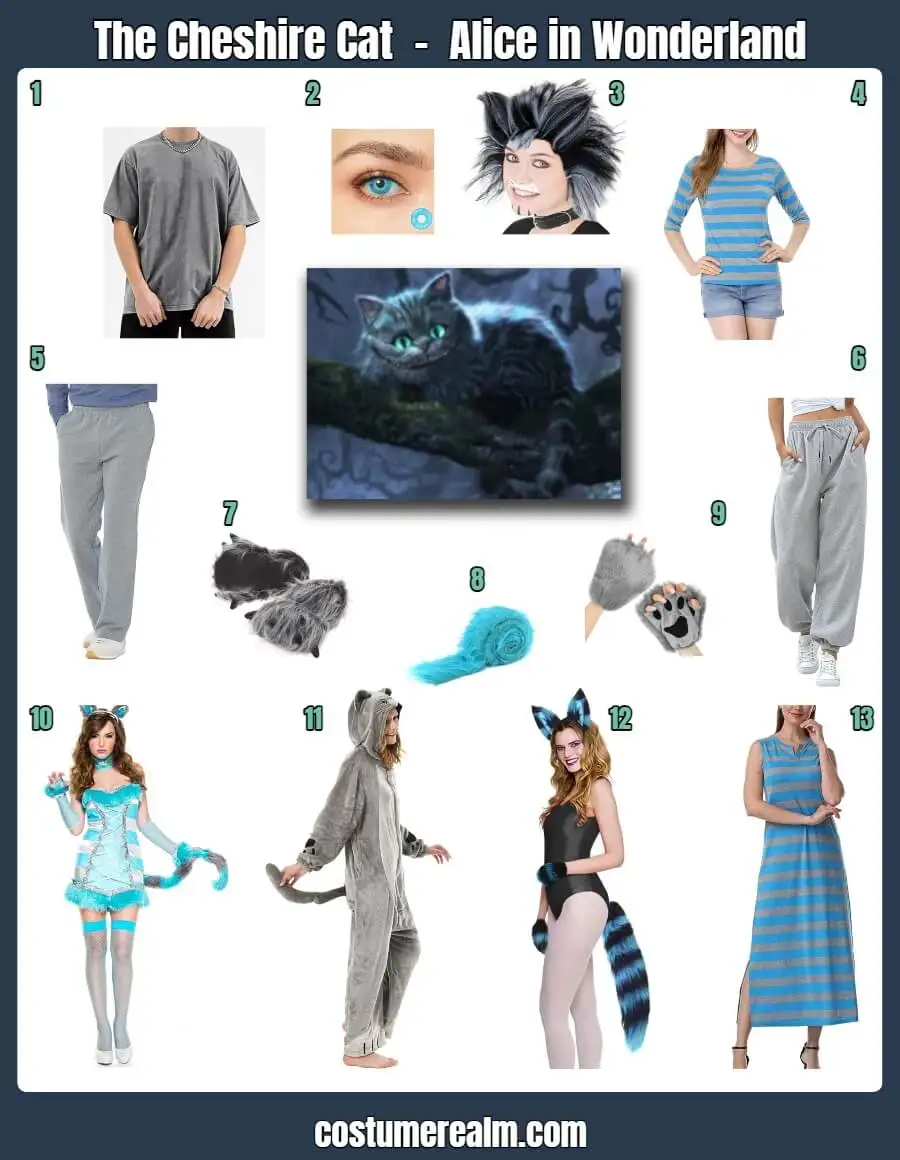
The Cheshire Cat Look
Affiliate links. We may earn a small commission at no extra cost to you.
Cheshire Cat
Alice in Wonderland
Classic Look
-
1 Cotton T-ShirtA plain base layer if you’re building the classic look from scratch rather than buying a full onesie. Grey or teal depending on which striped pattern you’re going for.See on Amazon
-
2 Ice Blue EyesThese are the contacts for the classic illustrated version. The pale blue reads better in photos than green and fits the uncanny quality of the original character.See on Twinklens
-
3 Cats Costume WigGrey or striped wig for the classic illustrated look. If your hair is already grey or very light, I’d skip this entirely.See on Amazon
-
4 Elbow Sleeves TopAdds the striped arm detail without committing to a full bodysuit. Useful if you want to layer rather than wear a single piece all night.See on Amazon
-
5 Fleece SweatpantComfortable base for the lower half. Grey or teal. This works if you’re doing a more casual or relaxed build of the costume.See on Amazon
-
6 SweatpantAlternative lower half option. Pick whichever fits the stripe pattern you’ve built on top.See on Amazon
-
7 Fuzzy Bear Feet PawOversized paw slippers for the feet. More commitment than regular shoes and they slow you down a bit, but they read immediately as the character. Worth it if you’re staying in one place most of the night.See on Amazon
-
8 Faux Fur Fabric StripFor adding fur trim details to the costume at cuffs, collar, or hem. Useful if you’re building from separates and want the look to feel more cohesive.See on Amazon
-
9 Fingerless Fur Suit PawHand paws that still leave fingers free. Better for practical use at a party than full paw gloves, since you can hold a drink without looking ridiculous.See on Amazon
-
10 Cheery Cheshire Cat Costume (essential)A full costume set if you want the classic look without building from individual pieces. Check that the headpiece or ears are included before ordering.See on Amazon
-
11 Plush Cosplay PajamaA cozy full-body option. Less precise than a proper costume but very wearable for a long night. The plush texture reads well in photos.See on Amazon
-
12 Cat Wolf Fox Tail Faux Fur Ear Headband Paw Gloves SetAn accessories bundle that covers ears, tail, and paw gloves in one purchase. Good value if you’re building the costume around separates and don’t want to source each piece individually.See on Amazon
-
13 Women Long Slit Maxi DressA more stylized, fashion-forward take on the costume if you want something wearable beyond Halloween. Pair with the ears and tail set and the grin face paint to keep the character readable.See on Amazon
Disney Cheshire Cat Halloween Costume Items
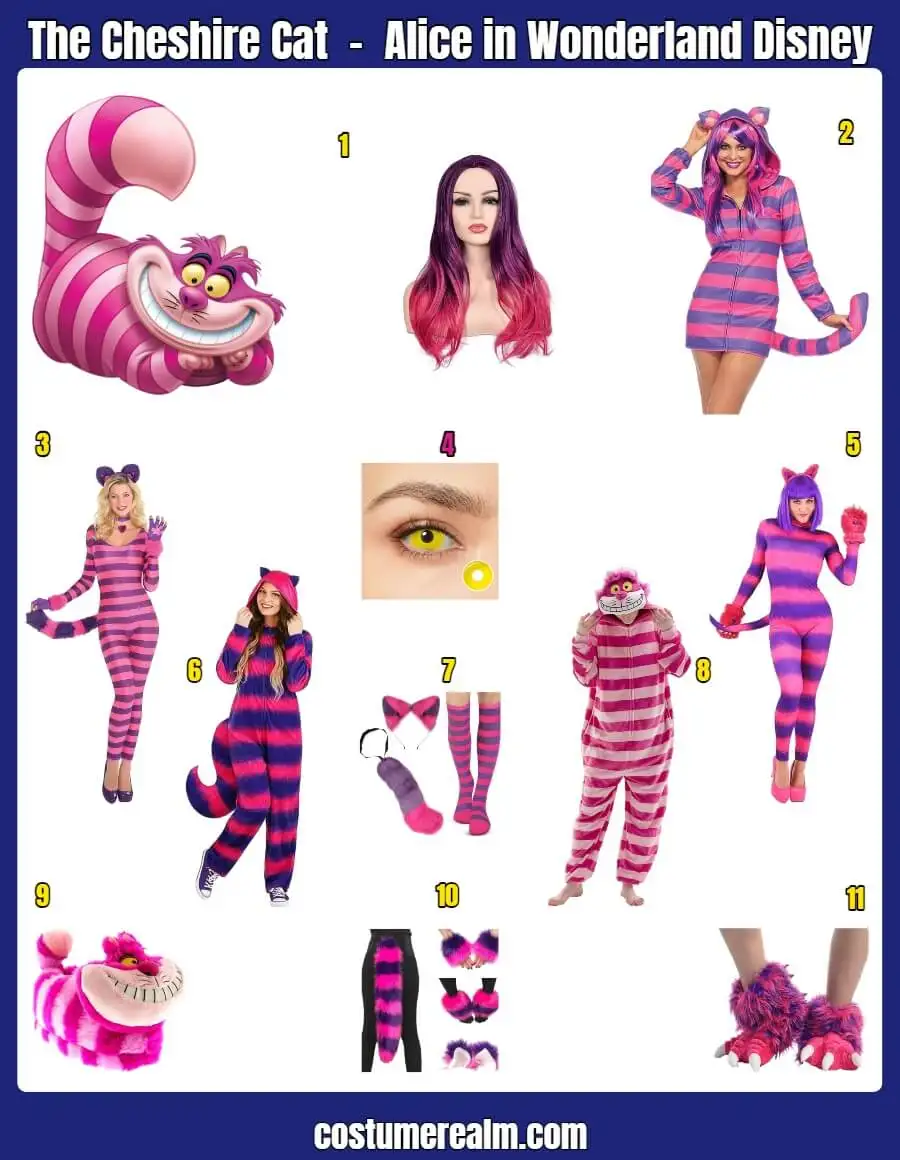
Disney The Cheshire Cat Look
Affiliate links. We may earn a small commission at no extra cost to you.
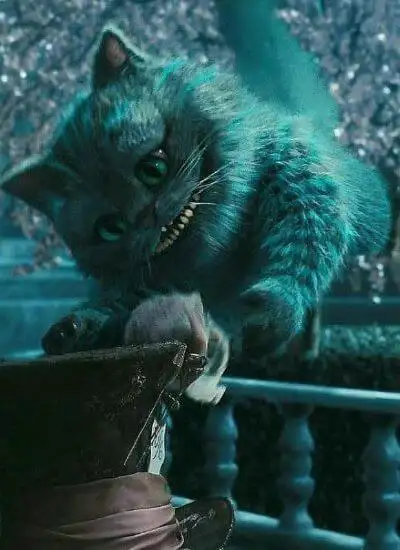
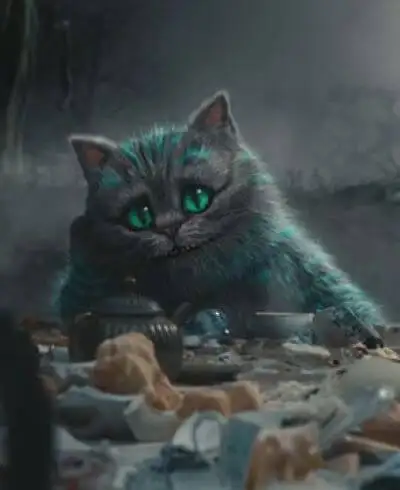
Disney Cheshire Cat
Tim Burton
2010 Film Look
-
1 Long Wavy Ombre Two Tone Purple Pink WigThis is the defining visual difference between the Disney version and every other Cheshire Cat costume. The purple-to-pink fade is immediately recognizable. Don’t skip it if you’re going for this specific version.See on Amazon
-
2 Cozy Cheshire Cat Wonderland Halloween Costume (essential)A full set that covers the main pieces for the Disney look in one purchase. Check for wig inclusion, it’s usually sold separately.See on Amazon
-
3 Lady Cheshire Cat Costume (essential)A more formal, dressed-up version of the Disney look. Works if you want the character to read as Cheshire Cat while still looking put-together.See on Amazon
-
4 Yellow EyesThe Disney film version has distinctly yellow-green eyes. These contacts are one of the clearer signals that you’re doing the 2010 Burton version rather than the animated or illustrated one.See on Amazon
-
5 Cheshire Cat BodysuitA fitted striped bodysuit in the purple-pink palette. Pairs directly with the wig and ears for a clean Disney version without extra layering.See on Amazon
-
6 Cheshire Cat One-Piece BodysuitAn alternative to item 5. One-piece rather than separate top and bottom, which makes the stripe alignment easier to manage.See on Amazon
-
7 Cat Ears Furry Tail Striped SockAn accessories set that includes ears, tail, and socks in coordinating stripes. Good for keeping the lower half consistent with the purple-pink palette without hunting for matching pieces separately.See on Amazon
-
8 One Piece Halloween CostumeA full-body option for the Disney version. Check sizing carefully, one-pieces vary a lot between listings.See on Amazon
-
9 Figural SlipperCharacter-specific slippers shaped like the Cheshire Cat. More novelty than practical footwear, but they work well for low-activity events or photos.See on Amazon
-
10 Cheshire Cat Costume AccessoriesAn accessories kit for the Disney version. Covers the pieces that complete the look without buying a second full costume if you already have the base.See on Amazon
-
11 Animal Paw SlipperPaw-style slippers as an alternative to the figural option. More wearable for a full evening if you’re moving around.See on Amazon