Halloween Costume Guide
A staff, a hat, and one line that everyone knows. You shall not pass on this one.
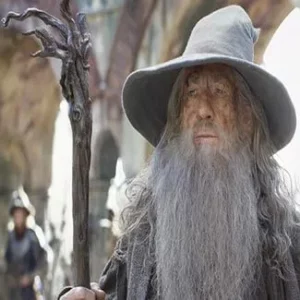
Gandalf spends most of the story moving people toward danger they would rather avoid. He is a Maia, one of the angelic beings sent to Middle-earth to help its peoples resist Sauron, though he rarely explains that to anyone. Ian McKellen plays him across six films in Peter Jackson’s Lord of the Rings and Hobbit trilogies. The pointed hat and grey beard combination is one of the most recognized costume silhouettes in existence. Most people will know who you are before you open your mouth.
Affiliate links. We may earn a small commission at no extra cost to you.
The hat and the beard are doing the recognition work together, and the beard is the one that fails first. If the adhesive loosens midway through the night and the beard starts shifting, the whole look starts reading as “guy in grey robes” rather than Gandalf specifically. The hat staying straight does not save it if the beard is crooked. Get the beard adhesive right, check it before you leave, and keep a small amount of spirit gum in a pocket for repairs.
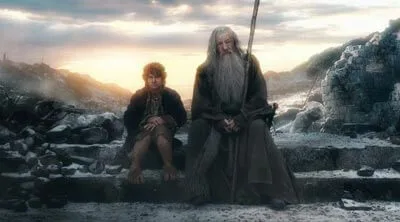
There is a scene where Gandalf arrives late to the Shire, sits down with Frodo, and explains that a wizard is never late, he arrives precisely when he means to. The delivery is completely unhurried. That is the character at the party. He does not explain himself. He does not perform. He is simply there, and he already knows more than you do about whatever is happening.
Test the beard adhesive the day before
Costume spirit gum varies in strength between brands, and some work poorly on certain skin types. Attach the beard at home the night before, leave it on for an hour, and see how well it holds when you move around. If it loosens easily in normal conditions, it will not last at a warm party. Knowing this in advance means you can either switch adhesive or bring a backup kit. Finding out at the venue is a worse situation.
Carry the staff all night
The temptation is to set it down when it becomes inconvenient, which happens within the first hour. Once the staff disappears, half the visual shorthand for the costume disappears with it. The collapsible versions are short enough when folded to slip into a bag if you genuinely need your hands free, but carrying it is always the better option. It is also the single prop most likely to prompt “you shall not pass” from strangers, which is either a selling point or a warning depending on your tolerance.
Group Idea: The Fellowship
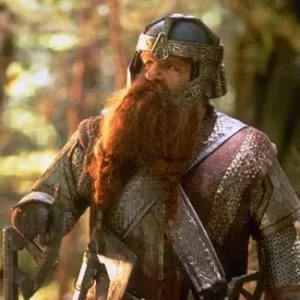
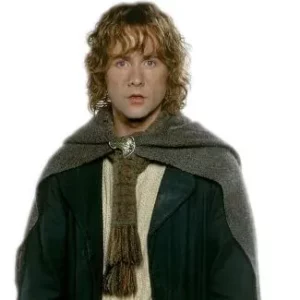
Excellent group for any event, full stop. The Fellowship is one of the most recognized ensembles in film history, and the visual contrast between the characters works even at a glance. Gandalf is the obvious anchor. The group reads with anywhere between three and nine members. Four is enough to land it clearly.
Group Idea: Wizards and Sorcerers
Strong group if everyone commits to their build. Gandalf, Doctor Strange, Harry Potter, and Wanda Maximoff cover three separate franchises and four different visual languages, which is actually what makes the concept work. The common thread is magic, and the differences in aesthetic are sharp enough that no two costumes blur together. At a general Halloween party, all four are widely recognized.
Group Idea: Same Actor
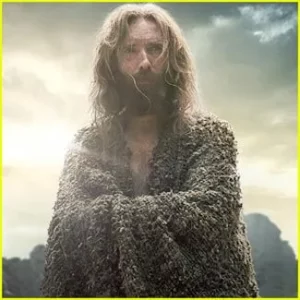
Strong group concept for a film-literate crowd. All four characters are played by Ian McKellen across different franchises. The joke is the point: one actor, wildly different roles, all in the same room. Gandalf and Magneto carry the recognition. Sir Leigh Teabing from The Da Vinci Code will need explaining to most people, which is either part of the fun or a reason to swap it for another McKellen role depending on the group.
Group Idea: Wise Mentors
Might work, but it only lands fully with a crowd that has strong references across all four franchises. Gandalf, Obi-Wan, Yoda, and Master Splinter are all wise mentor figures, which is the entire concept. The connection is thematic rather than visual. Yoda and Master Splinter both require more costume effort than Gandalf or Obi-Wan, and without commitment on those two, the group reads as “random characters who all have teachers” rather than a coherent concept.
This is one of the easier builds in fantasy costuming. The components are simple and widely available. The challenge is making the robe and beard look intentional rather than assembled at the last minute.
Gandalf moves slowly and speaks like he has already thought about this three times and decided to let you figure it out yourself. The energy is unhurried. He is never rattled.
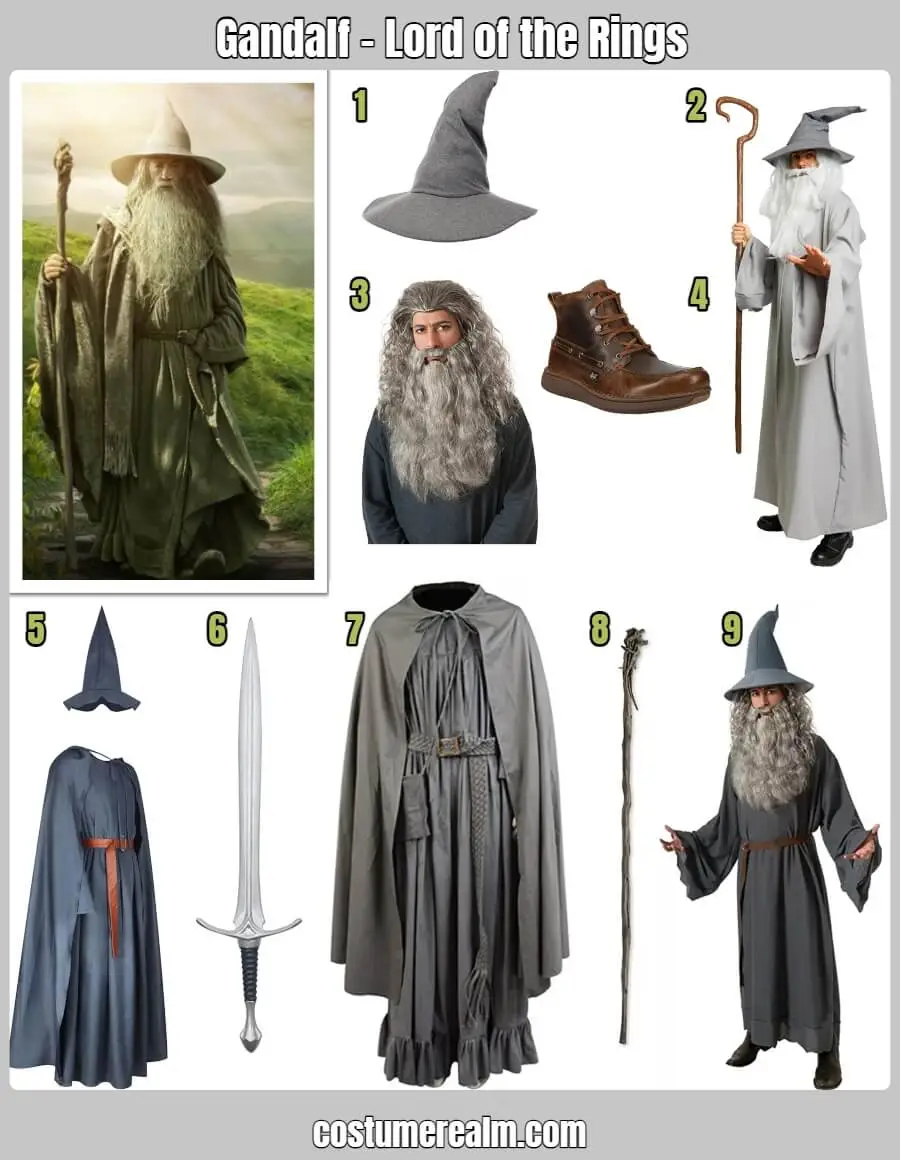
The tall pointed hat and long grey robes are the two items the costume cannot work without. Add a full grey beard and wig kit, a wooden staff, and a pair of sturdy dark shoes. A Gandalf sword is optional but gives you something to do with your hands at the party.
Yes, and few costumes can say that as confidently. The Lord of the Rings films have been in continuous cultural circulation since 2001, the Amazon series brought a new wave of attention to Middle-earth, and the pointed hat plus grey beard combination is one of the most recognized silhouettes in costume history. You will not have to explain who you are.
Two quotes follow him everywhere. The first is the confrontation line: “You shall not pass!” The second is more quietly useful: “All we have to decide is what to do with the time that is given us.” The first is what people will shout at you across the party. The second is the one worth actually knowing.
Gandalf is played by Ian McKellen in Peter Jackson’s Lord of the Rings and Hobbit film trilogies (IMDb). McKellen has described the physical demands of the role as significant, largely due to the scale-doubling work required to film scenes where Gandalf appears much taller than the Hobbit actors.
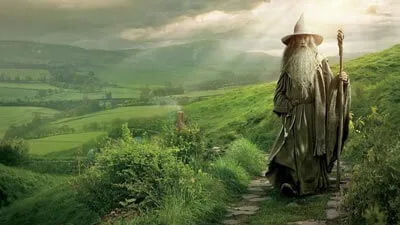
Gandalf the Grey is the version most people recognize for Halloween: tall grey hat, grey robes, grey beard, wooden staff. Gandalf the White appears after his return in The Two Towers, with white robes and a different staff. The Grey version is the one people place immediately. The White version works but requires more context at a general party.
Both work. A full set is faster and usually cheaper in total, but fit can be inconsistent. Building from pieces lets you get the robe length right and choose a better beard kit. If you already own long grey or brown robes from a previous costume, a good beard kit and the hat may be all you need.
It gives you something to hold, which solves the hands problem that ruins a lot of costume photos. It also doubles as a walking aid if the venue has uneven ground, and the prop versions are light enough to carry all night without fatigue. I would not skip it.
That is a real advantage. A natural beard sits in a way that no costume kit fully replicates. Add the hat, robes, and staff and you are largely done. The only thing to check is length. Gandalf’s beard is long and full. If yours is shorter or neatly trimmed, the beard kit extension is worth adding.