Costume Guide
I’m a damsel — I’m in distress — I can handle this. Four pieces, one of Disney’s most iconic non-princess heroines.
Quick Answer: To dress like Megara from Disney’s Hercules, wear the lavender and purple Grecian dress with its signature deeper purple hip sash, style or wear the auburn side-swept updo wig with loose face-framing tendrils, apply smoky purple eyeshadow, and put on flat tan gladiator strap sandals. Four pieces — the dress and wig do most of the character identification work.
Megara — Meg — is the sharp-tongued, fiercely independent heroine of Disney’s Hercules (1997), a character who stands apart from the Disney heroine tradition by being openly cynical, self-reliant, and deeply resistant to the idea of needing rescue. Her lavender Grecian dress, auburn updo, and dramatically shadowed eyes make her one of the most visually distinctive characters in the Disney Renaissance era — and one of the most rewarding to cosplay for anyone who connects with her particular brand of sardonic glamour. With just four pieces, this is one of the most achievable and most photographed Disney costume builds of the 1990s era.
Affiliate links — we may earn a small commission at no extra cost to you.
Start with the makeup before putting on the wig — it is far easier to apply the purple eyeshadow with a clear view of the face and no wig hair falling across the work area. Megara’s eye makeup is intentionally dramatic for a Disney character: the purple eyeshadow is applied heavily from the lash line upward and blended outward at the outer corners to create the characteristic heavy-lidded, knowing expression that defines the character. Build the shadow in layers — a mid-purple across the lid, a deeper shade at the lash line and crease, and a lighter shimmer at the inner corner to lift the eye. Keep the lip colour neutral or muted — the eyes are the entire focal point of the makeup.
The Megara wig comes pre-styled in her signature side-swept updo, but it will need a few minutes of adjustment to sit correctly. Position the updo on the higher side of the head rather than centred, and pull any loose face-framing tendrils forward to fall naturally along the cheekbones and neck. The specific reddish-auburn colour of Megara’s hair — darker and more burgundy-toned than standard red — is what distinguishes her silhouette from other auburn-haired Disney characters. Avoid adjusting the pre-styled updo too aggressively; the factory styling is typically the most accurate starting point.
Put on the dress and check the drape of the hip sash — the deeper purple panel should fall asymmetrically at the hip, heavier on one side, which is how it appears in the film. The dress’s draped bodice should sit low and wide across the collarbone in the Grecian style. If the bodice shifts during wear, a few pieces of fashion tape at the inner edge will keep it in position throughout an evening event. Complete the look with the flat gladiator sandals — the flatness is important for the costume’s overall silhouette and the film’s ancient Greek aesthetic.
Makeup Before Wig
Always apply the eyeshadow before fitting the wig. The updo’s loose tendrils fall forward across the cheek and forehead when the wig is on, making precise eyeshadow application significantly harder. With the wig off, you have full access to the eye area and can see the complete makeup result clearly before committing to the final look.
The Purple Gradient
Megara’s eyeshadow is not a single flat purple — it builds from a deeper shade at the lash line and outer corner to a lighter, more lavender tone across the centre lid. This gradient creates the heavy-lidded look that gives the character her distinctively world-weary expression. Use a small blending brush at the outer corner to soften the edge of the darker shade into the crease without hard lines.
Hip Sash Drape
The deeper purple hip sash on the dress should be arranged to fall heavier on one side than the other — in the film, it drapes asymmetrically toward the left hip. When you first put on the dress, take a moment to pull the sash fabric to the correct side and let it settle naturally. If the sash has a tendency to slide, a single stitch or safety pin at the waist seam will hold it in the right position all evening.
Bodice Fashion Tape
The wide, low Grecian bodice is the film-accurate look, but a draped neckline can shift during an active evening. A few strips of double-sided fashion tape at the inner edge of the bodice — pressed against the skin — will hold the drape in place without altering the dress. This is a standard technique for Grecian-style costumes and takes about thirty seconds to apply.
Tendrils Placement
The loose face-framing tendrils from the Megara wig should fall along the cheekbone line rather than straight down from the hairline. After fitting the wig, curl each tendril loosely around a finger and let it fall toward the cheek at a slight angle. The tendrils in the film have a soft, slightly wavy movement — not straight or tightly curled — and this loose placement is one of the details that makes the wig read as Megara specifically rather than a generic updo.
Flat Sandals Only
Megara’s sandals in the film are completely flat — ancient Greek footwear, not elevated. Heeled gladiator sandals significantly alter the costume’s proportions and push it away from the film’s aesthetic. Flat strappy sandals also happen to be far more comfortable for a full evening of wear, which is a practical benefit when the look is this close to accurate. Choose tan or light brown straps rather than black or metallic.
Disney Couple
Two of the Disney Renaissance’s most unconventional heroines side by side — Megara’s lavender Grecian gown alongside Esmeralda’s emerald and white romani dress. Both characters share an independence and self-possession that set them apart from the conventional Disney heroine archetype, and both have the kind of distinctive silhouette that makes the pairing immediately readable to any Disney fan from the 1990s. The purple and green colour contrast photographs beautifully.
Disney Renaissance Trio
Three Disney heroines from the peak of the Renaissance era — Hercules (1997), Mulan (1998), and Tarzan (1999) — who each represent a break from the passive princess model. Megara’s Grecian lavender, Mulan’s Chinese warrior aesthetic, and Jane’s Victorian safari look create three radically different visual palettes that make the group easy to read and visually varied from every angle. All three characters are defined by competence and wit rather than waiting to be rescued.
Non-Princess Disney Group
Four Disney heroines who each exist outside or at the edges of the official Disney Princess franchise — Megara the sardonic anti-damsel, Jasmine the princess who refuses to be defined by her title, Kida the ancient Atlantean warrior-queen, and Alice the literal child-wanderer of Wonderland. The group spans Disney from 1951 to 1997 and creates a celebration of the studio’s most individualistic female characters across four decades.
Ancient World Duo
Two Disney heroines from ancient civilisations — Megara from ancient Greece and Kida from the lost civilisation of Atlantis. Both characters carry the visual language of antiquity (Grecian draping, ancient stonework aesthetics) while being among Disney’s most capable and self-directed heroines. The lavender and purple of Megara’s Grecian dress alongside Kida’s white Atlantean ensemble creates a striking light-palette duo with a clear thematic concept built on ancient worlds and forgotten kingdoms.
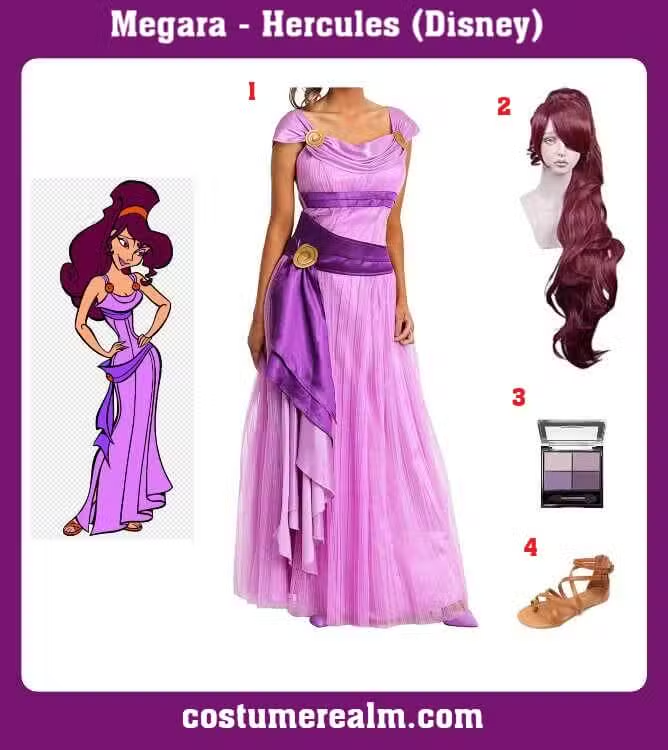
The licensed Megara dress is by far the most important piece to purchase rather than DIY — replicating the specific two-tone lavender and purple Grecian construction with the draped bodice and asymmetric hip sash is technically demanding for home sewing. The licensed dress handles all of this correctly and is the single purchase that makes the rest of the build easy. Paired with the Megara wig (item 2), the dress immediately establishes the character. Total build cost typically runs $60–$110 depending on whether you already own eyeshadow and sandals.
Dress first, wig second — these are the two non-negotiable purchases. The dress’s specific lavender-to-purple two-tone construction and draped Grecian silhouette is what makes the costume Megara rather than a generic Greek goddess look. The auburn updo wig is next — the colour and style are character-specific enough that a general wig will not read as Megara. The eyeshadow palette and gladiator sandals are the lowest-cost pieces in the build and can be sourced from any beauty or shoe retailer.
Megara wears a flowing lavender and purple Grecian-style dress with draped fabric at the bodice and a deeper purple sash and panel at the hip. The dress has a layered, asymmetric hemline that flows to the floor. She pairs it with flat tan gladiator strap sandals, and her auburn hair is styled in a high side-swept updo with loose tendrils falling around the face. Her eye makeup features smoky purple eyeshadow, which is a distinctively glamorous choice for a Disney character.
Megara’s hair is deep auburn styled in a high, swept ponytail or bun on one side with loose, curling tendrils falling around the face and neck. For the costume, use the Megara-specific auburn wig, which comes pre-styled in her signature updo. Position it high on one side of the head and pull loose tendrils forward to fall along the cheekbones. The specific reddish-burgundy tone of her hair is important — standard red wigs tend to read as Ariel rather than Megara.
Megara’s signature makeup centres on smoky purple eyeshadow applied heavily around the eyes for a dramatic, half-lidded effect. Use a purple-grey palette to build depth from the lash line upward, blending out at the edges. Her lip colour is typically neutral or muted — the eyes are the focal point. Adding eyeliner to extend the eye shape slightly outward at the outer corner completes the characteristic Megara expression.
Megara is not an official member of the Disney Princess franchise lineup, though she is one of Disney’s most beloved female characters from the classic Renaissance era. She is notable for being one of Disney’s most non-traditional heroines — sarcastic, cynical, and self-sufficient rather than conventionally princess-coded. This is part of why she has such a dedicated fanbase and why her costume is particularly popular with people who want a Disney look that stands apart from the standard princess lineup.
Megara wears simple tan or brown gladiator-style strap sandals — flat, strappy footwear consistent with the film’s ancient Greek setting. The sandals should be flat or very low-heeled with multiple straps across the foot and ankle. Avoid heeled or modern-looking sandals — flat gladiator sandals keep the costume grounded in the film’s aesthetic and are significantly more comfortable for a full evening of wear.
Hercules is the most natural pairing — the hero to Megara’s reluctant love interest. For Disney Renaissance group costumes, Esmeralda from The Hunchback of Notre Dame, Mulan, Princess Jasmine, and Kida from Atlantis all share the same late-1990s Disney era and non-traditional heroine energy. Jane from Tarzan is another strong option from the same period. All of these characters represent Disney’s most unconventional and self-directed heroines from the 1990s.
Megara is one of the most instantly recognisable Disney Renaissance heroines for anyone who grew up with 1990s Disney films. The lavender-purple Grecian dress and auburn updo are a distinctive combination that Disney fans identify immediately. The costume is particularly strong at 1990s Disney or Disney Renaissance-themed events, and the purple colour palette photographs beautifully. Four pieces total makes it one of the most streamlined Disney builds available.
Megara’s dress features a deeper purple sash and fabric panel at the hip — darker than the lavender of the main skirt — that wraps around the waist and drapes asymmetrically. This contrast between the lighter lavender bodice and skirt and the deeper purple hip panel is one of the most character-specific details of the dress. The licensed Megara dress replicates this two-tone effect, and it is the element that most clearly separates the costume from a generic Grecian dress.