Halloween Costume Idea For Men
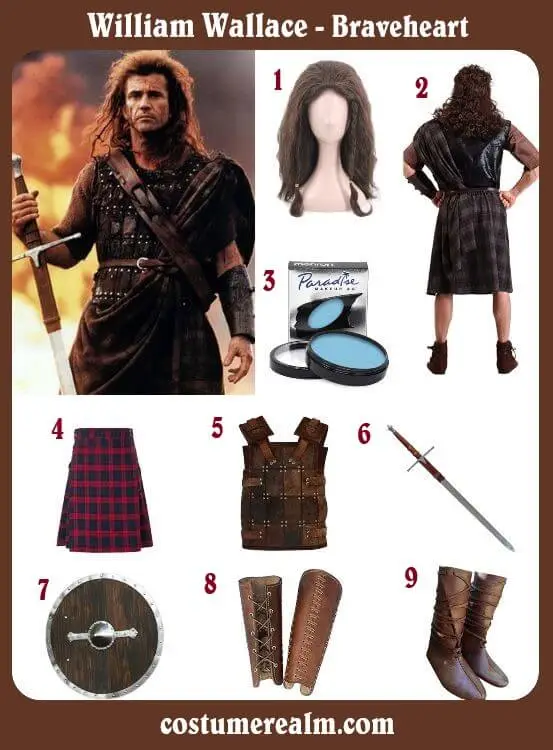
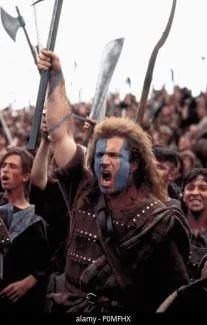
William Wallace leads Scotland’s rebellion against English rule in Braveheart, after English soldiers execute his wife and give him a reason to stop being peaceful about it. The blue face and body paint is the one detail that actually makes this costume specific, since the tartan and armor alone could be almost any medieval warrior. Braveheart won five Academy Awards including Best Picture in 1996 (Wikipedia), so recognition is broad here, most adults will place the look immediately, painted face and all.
Affiliate links. We may earn a small commission at no extra cost to you.
The face paint is what people look at first, and it needs real coverage across the face and neck to read as intentional rather than a smudge. His win at the Battle of Stirling came from disciplined spearmen holding formation against a much bigger force, not brute strength, and that same idea applies here: a clean, deliberate paint job beats a rushed one every time. At a dim party, thin or patchy paint just reads as dirt, and the whole costume drops from “Scottish rebel” to “guy who fell in a puddle.”
Wallace forgives Scottish nobles again and again even after they betray him, which is either admirable or a serious blind spot depending on how you look at it. He also refuses to beg for mercy under torture, and his last word is simply “Freedom.” Playing that stubborn, unbothered defiance, rather than constant shouting, is closer to the character than going full battle-rage all night.
Test the face paint on your skin before the party
Cheap face paint can flake or transfer onto clothes and other people at a crowded event. Do a patch test a day ahead, and pick a formula that sets rather than stays wet all night.
Don’t carry both the sword and shield the whole night
Managing two large props while also holding a drink gets old fast. Pick one to carry and leave the other for photo moments if you’re short on hands.
Couples Idea
Might work, but Murron doesn’t have a distinct costume of her own, she’s dressed as an ordinary medieval woman, so this pairing depends on the crowd already knowing the story rather than reading visually on its own. It lands better as an in-joke for people who’ve actually seen the film.
Duo Idea
Strong duo if the second person actually builds out Robert the Bruce’s royal armor and heraldry, since two generic medieval Scottish warriors standing together doesn’t say much on its own. After Wallace’s execution, Bruce is the one who finally wins Scotland’s freedom at the Battle of Bannockburn, so the pairing has real weight for anyone who knows that.
Group Idea: Iconic Medieval & Viking Warriors
Excellent group, and one of the easier warrior lineups to pull off, since each of these four has a wildly different silhouette despite sharing a general medieval theme. Aragorn’s ranger cloak, Ragnar’s braided Viking look, Amleth’s berserker build, and Eivor’s hooded gear all read as distinct characters, no explanation needed for fans of any of the four source materials.
Group Idea: Legendary Warriors & Battlefield Heroes
Might work, but three of these four have no dedicated costume guide here, so Leonidas, Maximus, and Achilles are all build-it-yourself for anyone who knows the films well enough to nail the armor without a reference. The concept itself, legendary battlefield heroes across different eras, is a strong one, the site just can’t hold every hand for it yet.
Most of this costume is easy to thrift or piece together. The face paint is the one thing worth buying a real product for instead of improvising.
Wallace is stubborn, forgiving to a fault, and doesn’t back down under pressure. Quiet defiance works better than constant shouting.
Build the base with the tartan or full Braveheart costume, layer on leather armor and bracers, and add the sword and shield. The blue face and body paint is what actually sells the character, put that on last.
Yes. Braveheart won five Academy Awards including Best Picture in 1996, and the blue-painted warrior image is one of the most quoted looks in war film history. Most adults at a party will recognize it on sight, even people who haven’t seen the movie in years.
“They may take our lives, but they’ll never take our freedom!” is the one everyone knows. His final word before execution, simply “Freedom!”, is the second most quoted. He also says, “Every man dies. Not every man really lives.”
Yes, but the film takes real liberties. The historical Wallace was a minor Scottish noble, not a farmer, and his romance with Princess Isabella in the film never happened in real life.
Blue woad face paint is associated with ancient Picts, centuries before Wallace’s lifetime in the 13th and 14th centuries. Real Scottish warriors of his era didn’t fight in blue paint, but the film made it his signature image anyway.
He’s betrayed, captured, and tried for treason in London. He refuses every chance to swear loyalty to King Edward, endures torture, and dies shouting “Freedom!” instead of begging for mercy.
No. The nickname historically belonged to Robert the Bruce, not Wallace. The film borrowed it for the title anyway.
What is the name of William Wallace’s wife in Braveheart?
Which Scottish leader avenges Wallace’s death by winning the Battle of Bannockburn?
What tactic helps Wallace’s smaller army win the Battle of Stirling?