Costume Guide
Woke up this morning. Got yourself a costume. Open-collar camp shirt, faux leather jacket, dress pants, a cigar, and the particular weary authority of a man running two families at the same time. The most celebrated antihero in television history.
Quick Answer: To dress like Tony Soprano from The Sopranos, put on the classic pleat dress pants, button up the retro camp shirt and leave it untucked, pull on the faux leather jacket, lace up the black oxford shoes, slide on the red gemstone ring, and keep the fake cigar in hand or at the corner of the mouth. The cigar is the costume’s most important in-character prop and the single accessory that shifts the full look from well-dressed New Jersey man into unmistakably Tony Soprano. The ring is the second most important piece. Together, those two accessories do most of the recognition work before a single word is spoken.
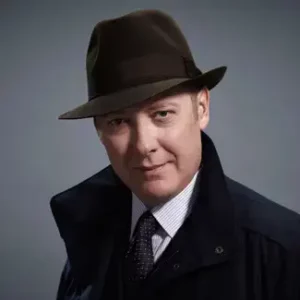
Anthony John Soprano, known as Tony, is the boss of the DiMeo crime family and the central figure of David Chase’s HBO drama The Sopranos, which ran from 1999 to 2007. Played by James Gandolfini in a performance that redefined what dramatic television could achieve, Tony is a suburban New Jersey mob boss managing panic attacks, a demanding mother, an unstable marriage, and a criminal organisation simultaneously, none of them particularly well. He sees a therapist, feeds ducks, and has people killed, sometimes in the same week. The series treats all of this with complete seriousness, and the result is one of the most psychologically complex and morally demanding protagonists in the history of the medium. His wardrobe — comfortable, slightly louche, entirely New Jersey — is as specific and recognisable as the character himself, and the costume builds naturally from the same logic: functional, unhurried, and immediately legible to anyone who has spent time in his company.
Affiliate links — we may earn a small commission at no extra cost to you.
The Tony Soprano build assembles in a specific order that matters for the final silhouette. Put on the classic pleat dress pants first and ensure they sit correctly at the waist — the pleat should fall flat and the trouser leg should break slightly over the shoe rather than sitting too high. Then put on the retro camp shirt and leave it untucked. This is not optional: Tony Soprano does not tuck his shirt. The untucked camp shirt over dress pants is the specific combination that creates his look, and tucking the shirt converts the costume into generic smart-casual rather than The Sopranos. Pull on the faux leather jacket and lace up the black oxford shoes. Slide on the red gemstone ring and keep the fake cigar accessible throughout the event.
The camp shirt choice matters more than it might initially seem. Tony’s shirts across the series run toward bold prints, strong colours, and a slightly louche retro quality — they are not subtle. A camp shirt in a muted or understated print reads as a generic casual shirt. One in a bolder colour or with a visible pattern reads as a deliberate choice and contributes to the costume’s specific period and cultural register. If selecting from existing wardrobe rather than purchasing, choose the loudest, most open-collar option available and err toward warmth of colour: burgundy, forest green, navy with print, and strong solids all work. A pale or grey shirt does not.
For the in-character physical register, Tony Soprano moves and stands in a specific way that is as much a part of the costume as any of the clothing pieces. He occupies space deliberately and without apology. His default posture is relaxed but present, slightly weighted toward one side, with the cigar held loosely in two fingers at waist height or raised to the mouth with a slow deliberate gesture. He does not fidget. He pauses before responding to questions, and when he does respond, he makes clear that the conversation continues at his pace rather than anyone else’s. Adopting this physical register for ten minutes before the event begins makes it natural by the time you arrive, and it is the detail that elevates a well-assembled costume into a genuine character performance.
The Cigar Is the Most Important Prop in the Build
The fake puff cigar is not a decorative addition to the Tony Soprano costume — it is the single prop most responsible for making the full look read as him specifically rather than as a well-dressed man in a camp shirt and leather jacket. Tony’s relationship with his cigar throughout The Sopranos is consistent and specific: he holds it, chews it, uses it to punctuate silences, and treats it as a natural extension of his physical presence in any scene. The prop cigar performs the same function at a Halloween event, providing a continuous in-character physical anchor that communicates the character without requiring any verbal declaration. Keep it in hand or at the corner of the mouth throughout the evening rather than putting it away. A fake puff cigar produces a light vapour that reinforces the visual effect without the health or venue complications of an actual cigar. Check event rules regarding prop smoking devices before the event and carry the cigar unlit if there is any uncertainty about venue policy.
Choosing the Right Camp Shirt for the Build
The retro camp shirt is the costume’s central garment and the piece with the most visible impact on whether the final look reads as Tony Soprano or as an unspecific Halloween costume involving a leather jacket. Tony’s shirts across the series share a consistent set of qualities: they are short-sleeved or long-sleeved with a distinctive camp collar rather than a standard button-down collar, they are worn open at the top two buttons, and they tend toward bold or warm colour rather than neutral or pale tones. When selecting or purchasing the camp shirt for this build, prioritise a design with visible character — a strong solid colour, a subtle print, or a retro pattern — over anything that reads as understated or corporate. The shirt should look like something a man chose because he liked it, not because it was the least offensive option available. If ordering online, choose a size that fits comfortably across the shoulders and chest without pulling, since the untucked wear means fit at the waist is secondary to fit at the upper body.
The Red Gemstone Ring: Wear It on the Right Hand
Tony Soprano wears his signature ring on his right hand throughout The Sopranos, which is the correct placement for the costume and the detail that fans of the show will notice if it is worn on the wrong hand. The ring should be worn on the middle or ring finger of the right hand at a position that is visible when the hand is held naturally at rest, since it functions as a status marker and is most effective when it catches light during natural movement rather than being hidden in a fist or pocket. If the ring arrives and is slightly too large for the intended finger, a small piece of clear tape applied to the inner band is more reliable than a ring sizer insert for an event where the hand will be moving constantly. Check the ring in warm and cool light before the event, since the red gemstone reads differently in the yellow artificial light typical of event venues than in natural daylight, and ensure it is bright and clean rather than dulled, as a dull stone loses the status-marker quality that makes it character-specific.
Playing Tony Soprano In Character at an Event
Tony Soprano’s in-character register is one of the most rewarding to sustain at a Halloween event because it is built almost entirely from physical presence and economy of speech rather than from specific scripted lines or prop interactions. The core of the performance is unhurried authority: Tony does not rush to respond, does not over-explain, and does not visibly seek approval for anything he says or does. When someone approaches in costume, acknowledge them with a slight nod before speaking. When asked a question, pause for a beat before answering. When someone does something surprising or chaotic nearby, let it register on your face for a moment before returning to whatever you were doing, with no comment. These beats of quiet, observational restraint are far more effective as Tony Soprano than any attempt to deliver famous lines in the correct accent, and they sustain naturally across a full evening without performance fatigue. The cigar, held throughout, does most of the physical communication without any active effort on your part.
The Sopranos Crew
The core Bada Bing crew assembled as a group, covering the full inner circle of the DiMeo family’s most recognisable faces. Tony’s camp shirt and cigar authority alongside Christopher’s younger, more fashion-forward energy, Silvio’s magnificent pompadour and sharp suit, and Paulie’s distinctive white-streaked temples and fastidious grooming creates a group with exceptional internal visual variety while remaining immediately legible as a single crew from the same show. Each of the four characters has a specific and well-established visual signature that is distinct enough to read individually while the shared New Jersey mob aesthetic holds the group together as a coherent unit. This is the strongest and most immediately recognisable Sopranos group build available, and it rewards both dedicated fans of the series and anyone who has absorbed its cultural footprint over the past two and a half decades.
Mafia Icons — Film & TV
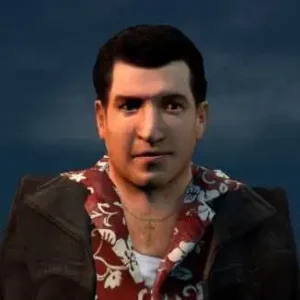
Three of the most recognisable figures from across mafia fiction assembled as a group, spanning the foundational text of the genre through to its most celebrated television iteration. Tony’s suburban New Jersey comfort alongside Vito Corleone’s patrician Sicilian formality and Joe Barbaro’s Mafia II period aesthetic creates a group with strong internal contrast across era, tone, and visual register while sharing the common identity of organised crime leadership. Vito Corleone is the reference point against which all subsequent mafia fiction measures itself, and placing him alongside Tony Soprano — a character who is explicitly aware of and influenced by The Godfather mythology — rewards any fan who recognises the specific relationship between those two cultural objects. See the build at Godfather costume and Joe Barbaro costume.
Crime Television Bosses
Three of the most celebrated antagonist or antihero figures from prestige crime television, assembled across the Breaking Bad and Sopranos universes as a group built on the shared quality of extraordinary authority and radically different methods of exercising it. Tony’s openly physical New Jersey mob presence, Gus Fring’s meticulous fast-food-franchise double life and forensic self-control, and Lalo Salamanca’s mercurial charm and genuine unpredictability create a group with exceptional tonal range and strong individual visual distinction. The contrast between Tony’s comfortable loudness, Gus’s quiet precision, and Lalo’s elegant volatility is both visually and thematically rich, and rewards any fan of either series with immediate legibility. See the guides at Gus Fring costume and Lalo Salamanca costume.
Iconic Screen Criminals
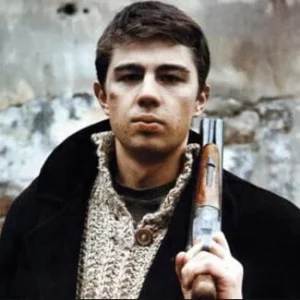
A group drawn from three distinct traditions of screen crime across American prestige television and international cinema, united by a shared quality of operating outside institutional authority with complete personal conviction and radically different aesthetics. Tony’s organised-crime establishment weight, Danila Bagrov’s post-Soviet urban vigilante energy from Brother, and Tuco Salamanca’s explosive cartel volatility from Breaking Bad create a group with exceptional cross-cultural and cross-genre breadth. Each character represents a meaningfully different relationship to violence, loyalty, and personal code, which gives the group a curatorial coherence beyond the simple fact of being three criminals in costume. The visual contrast between the three is strong enough that each person reads clearly as a distinct character at a distance, while the shared criminal identity holds the group together as a deliberate ensemble. See the builds at Danila Bagrov costume and Tuco Salamanca costume.
The Tony Soprano costume has a significant advantage over most character builds in that every piece is a wearable clothing item rather than a specialist costume component. This means that if any piece is not available for purchase in time, it can be sourced from existing wardrobe or charity shops with a reasonable expectation of finding something workable. For the camp shirt, look for anything with a camp collar — the distinguishing feature is the flat, no-stand collar that buttons all the way to the neck — in a warm solid colour or bold print. For the dress pants, any classic-cut trouser in dark navy, charcoal, or black with a straight leg and a front pleat achieves the correct silhouette. For the jacket, any dark faux or real leather jacket cut to the hip rather than the waist reads correctly. For the shoes, any black closed-toe leather or leather-look shoe with a low profile works. The cigar and ring are the pieces least likely to be sourced from existing wardrobe and the ones most worth purchasing specifically for the build.
Tony Soprano’s untucked camp shirt over dress pants is not simply a casual styling choice — it is the specific combination that communicates the character’s particular position in his world: a man with money and status who dresses entirely on his own terms and answers to no dress code. Tucking the shirt destroys this quality immediately. The untucked shirt must also fall at the correct length to work: a shirt that is too long over dress pants looks like sleepwear, while one that is too short reads as a deliberate fashion choice rather than Tony’s specific comfortable nonchalance. The ideal untucked length ends at approximately the trouser pocket line or just below the hip, covering the waistband without hanging significantly below it. When ordering or selecting the camp shirt, check the listed garment length against this measurement. If the shirt is too long, a single horizontal fold at the bottom hem pressed flat with an iron creates a clean internal tuck that shortens the shirt without visible stitching and can be removed after the event.
Tony Soprano’s signature look across The Sopranos is built around a retro camp shirt worn untucked over classic pleat dress pants, a faux leather jacket for outdoor scenes, black oxford shoes, a gold ring set with a red gemstone, and a cigar. The untucked shirt over dress pants is the specific combination that defines the costume and separates it from generic smart-casual dressing. The cigar and the red gemstone ring are the two accessories most immediately associated with the character and the pieces that do the most recognition work at an event.
Tony Soprano is played by James Gandolfini in The Sopranos, the HBO drama series created by David Chase that ran from 1999 to 2007. Gandolfini’s performance is widely considered one of the greatest in the history of television, earning him three Emmy Awards and fundamentally changing audience expectations for dramatic television. The character is inseparable from Gandolfini’s specific physical presence, emotional range, and the particular quality of authority and vulnerability he brought to the role across eight years of production.
Tony’s most quoted declaration — that he is the one who comes to you — captures his character at his most dangerous and most wounded simultaneously. His admiring repetition of the line about a man who doesn’t spend time with his family never being a real man reveals his complex relationship with the Godfather mythology he both venerates and fails to live up to. His insistence that he is a soldier, made in moments of self-justification, is the series’ most repeated marker of his need to frame his life within a code larger than his own contradictions. For in-character use at a Halloween event, Tony’s register is most effective when built from unhurried physical presence and economy of speech rather than from scripted lines — the pauses before he responds are as much a part of the character as anything he actually says.
Tony Soprano wears a gold ring set with a red gemstone throughout The Sopranos, one of the most consistently present and character-specific accessories in the series. It functions as a marker of his status within the DiMeo crime family and is worn on his right hand. A replica red gemstone ring is strongly recommended as part of the costume build — it is the accessory most likely to generate immediate recognition from fans of the show who might otherwise read the rest of the costume as a generic smart-casual look. Wear it on the middle or ring finger of the right hand for accuracy.
Yes. All six pieces of the Tony Soprano costume are wearable clothing items or everyday accessories rather than specialist costume components, which makes both sourcing and assembly straightforward. The retro camp shirt, faux leather jacket, classic pleat dress pants, black oxford shoes, fake cigar, and red gemstone ring require no sewing, crafting, or modification. Total cost typically runs $80 to $150 depending on which items are already owned and which quality tier is chosen. The fake cigar and the red gemstone ring are the two pieces most worth purchasing specifically for the build rather than attempting to substitute from existing wardrobe.
The most recognisable Sopranos group build is the Bada Bing crew: Tony alongside Christopher Moltisanti, Silvio Dante, and Paulie Gualtieri. All four have specific visual signatures — Silvio’s pompadour, Paulie’s white-streaked hair, Christopher’s slightly younger and more fashion-forward look — that create strong internal variety while remaining clearly legible as a unit from the same series. A broader group drawing on crime television and film characters from other titles also works well, pairing Tony’s suburban New Jersey establishment weight against more operatic or volatile figures from other corners of the genre.