Halloween Costume Guide
Ryu travels the world looking for stronger opponents, funded between tournaments partly by working as muscle for criminal organizations, which he considers a reasonable extension of his training. The torn-sleeve white gi is the costume, and without it the look drifts into generic karate rather than anything character-specific. Street Fighter has been running since 1987 and Ryu is the face of the entire franchise (Wikipedia); recognition on this one is about as broad as fighting game costumes get.
Affiliate links. We may earn a small commission at no extra cost to you.
The gi jacket is the first thing people read, and the condition of it matters more than the cut. A pristine, uncreased, obviously-new karate jacket reads as someone heading to their first class, not someone who has been fighting his way across Southeast Asia on minimal funds for four decades. The torn sleeves are not optional; they are what makes the silhouette specific rather than generic. The headband ties directly on the forehead, not pushed back on the skull, because pushed back reads as headband and forward reads as Ryu. Get the jacket wrong and the whole look collapses into “went to karate once.”
When formally invited to join the Avengers in Marvel Super Heroes vs. Street Fighter, Ryu told Captain America he needed to continue following his own path and left. He funds his travels between tournaments by working as muscle for criminal organizations, which he considers training with extra steps. He is not unfriendly. He simply has one thing he is doing, and everything else is assessed based on whether it interferes.
Tear the sleeves before you arrive, not after
Cutting the sleeves yourself on a cheap karate jacket works, but cheap fabric frays inconsistently and a clean scissor line on white cotton is visible as a costume choice from ten feet away. If you cut them yourself, cut slightly higher than you think you need to and then pull the fabric outward along the cut to fray it. Rubbing sandpaper along the cut edge finishes this convincingly. A pre-distressed gi from a costume supplier skips this step entirely and is worth the few extra dollars if you want the effect without the crafting session the night before.
Tie the headband before you put the jacket on
Tying a headband over an already-worn gi collar is awkward and usually results in a looser knot than you want. Put the headband on first, get the tension right, then layer the gi jacket over it. This keeps the knot tight and the band sitting correctly on the forehead rather than riding up as the night goes on. Once it is on and set correctly, you should not need to adjust it again.
Couples Idea
Excellent couple pairing and the most immediately recognizable Street Fighter duo in the franchise. Chun-Li’s structured blue qipao and ox-horn buns contrast directly with Ryu’s torn gi and bare feet — two costumes that read as a pair at a glance without requiring any explanation. Both are CostumeRealm guides.
Duo Idea
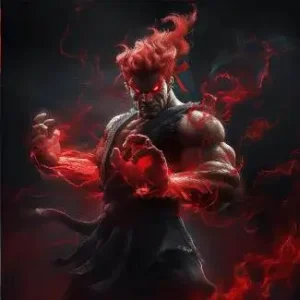
Excellent duo with genuine narrative stakes behind it. Akuma killed Ryu’s master, repeatedly tried to push him into abandoning his humanity for destructive power, and represents the specific endpoint Ryu has spent his entire life trying to avoid becoming. They share the same Ansatsuken base style, but Akuma’s dark gi and prayer beads against Ryu’s white gi makes them readable as a contrast pair from across a room. Both have CostumeRealm guides.
Group Idea: Street Fighter Full Squad
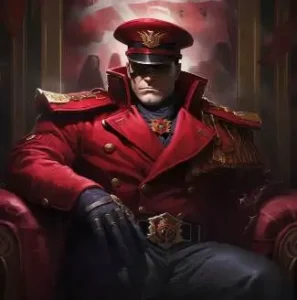
Excellent group for a gaming crowd, and one where all six characters have CostumeRealm guides, so nobody is left building from scratch. The visual range across the six is genuinely wide: Chun-Li in a qipao, Guile in military attire, Bison in his dictator coat, Sagat shirtless with an eyepatch, Akuma in dark robes, and Ryu in a torn gi. That variety is what makes it read as a roster rather than a matching theme.
Group Idea: Iconic Martial Arts Characters
Might work, but the source material is completely different across all five and the concept requires a crowd that follows multiple franchises. Ryu and Scorpion both throw projectiles but come from competing fighting game universes that have never actually crossed over. Johnny Lawrence is from a live-action TV show about suburban karate politics. Master Splinter is a giant rat who teaches teenagers. Iron Fist is Marvel. The loose concept is “martial arts characters from various properties,” which lands at the right event with the right crowd. At a general Halloween party, plan to explain the group concept more than once.
Most of this build is thriftable. White karate gis and white drawstring pants show up regularly at second-hand sports stores. The headband and gloves are cheap enough to buy new. The one item worth ordering specifically is the complete costume set if you want to skip sourcing pieces separately.
Ryu does not talk much because he is usually thinking about the next fight. He is not unfriendly. He is just operating on a different priority system from everyone else in the room.
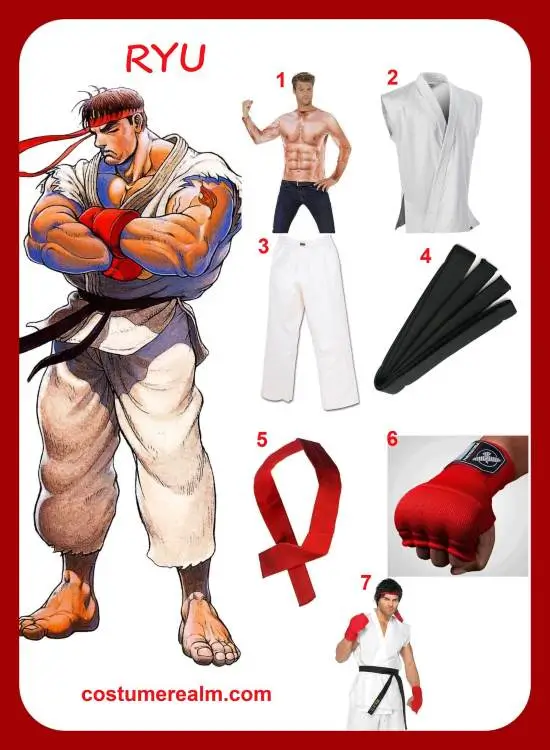
The torn-sleeve white karate gi and red headband are the core. Add karate pants, a black belt, and red hand wraps or gloves. The sleeves need to be torn off, not just pushed up. Bare feet are accurate but optional at a party — white socks read correctly from a distance.
Street Fighter 6 released in 2023 and the franchise has stayed continuously active for nearly forty years, with Ryu as its defining face throughout. Recognition on this costume is broad — most people who have touched a video game console since 1992 will know who you are without any explanation.
It was originally Ken’s. During a dangerous sparring match in the Alpha-era storyline, Ken gave Ryu his own red headband specifically to help him stay focused and resist the Satsui no Hado. It became Ryu’s signature accessory and a symbol of the friendship between them. The headband is not just a costume detail — it is a piece of lore worth knowing if you want to explain the costume accurately.
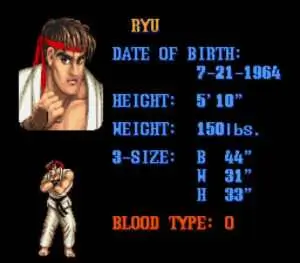
Ryu is the original protagonist of the Street Fighter franchise, first appearing in the 1987 arcade game and present in every mainline title since. He travels the world testing himself against stronger opponents, driven by a singular focus on mastering his martial art. His Hadoken fireball and Shoryuken uppercut have been imitated and parodied in video game culture for close to forty years.
The Satsui no Hado is a corrupting inner force Ryu carries that amplifies his destructive power at the cost of conscious control — when it takes hold he can no longer choose his targets. He spends most of the Street Fighter storyline fighting to suppress it, finally rejecting it in Street Fighter V in favor of a self-defined philosophy called the Power of Nothingness. It matters for the costume in one specific sense: Evil Ryu, the form he takes when fully consumed by the Hado, uses a darker gi and red eyes, which are the main differences if you want that variant instead.
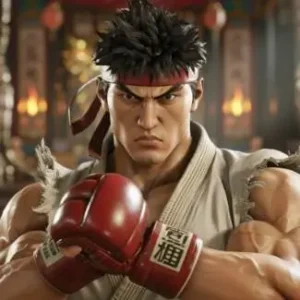
The classic Street Fighter II look: torn-sleeve white gi, red headband, black belt, red gloves, and bare or minimally-shod feet. This is the version most reproduced in merchandise and cultural references, and the one most people will recognize on sight. The Street Fighter 6 redesign adds a Buddhist kasaya robe and sandals deliberately modeled on his late master Gouken — a better cosplay project than a Halloween build unless you are very committed to the detail work.
Barefoot is accurate for the classic era, and also a fast way to step on something at a Halloween party. White socks work at distance and most people will not notice. The only canonical footwear in his classic period is the red martial-arts slippers from the original 1987 arcade game — not a detail anyone will be checking for.
What color was Ryu’s headband in the original 1987 Street Fighter arcade game?
Who gave Ryu his iconic red headband?
Which ancient text is referenced by the Fūrinkazan kanji on Ryu’s black belt?