Halloween Costume Guide
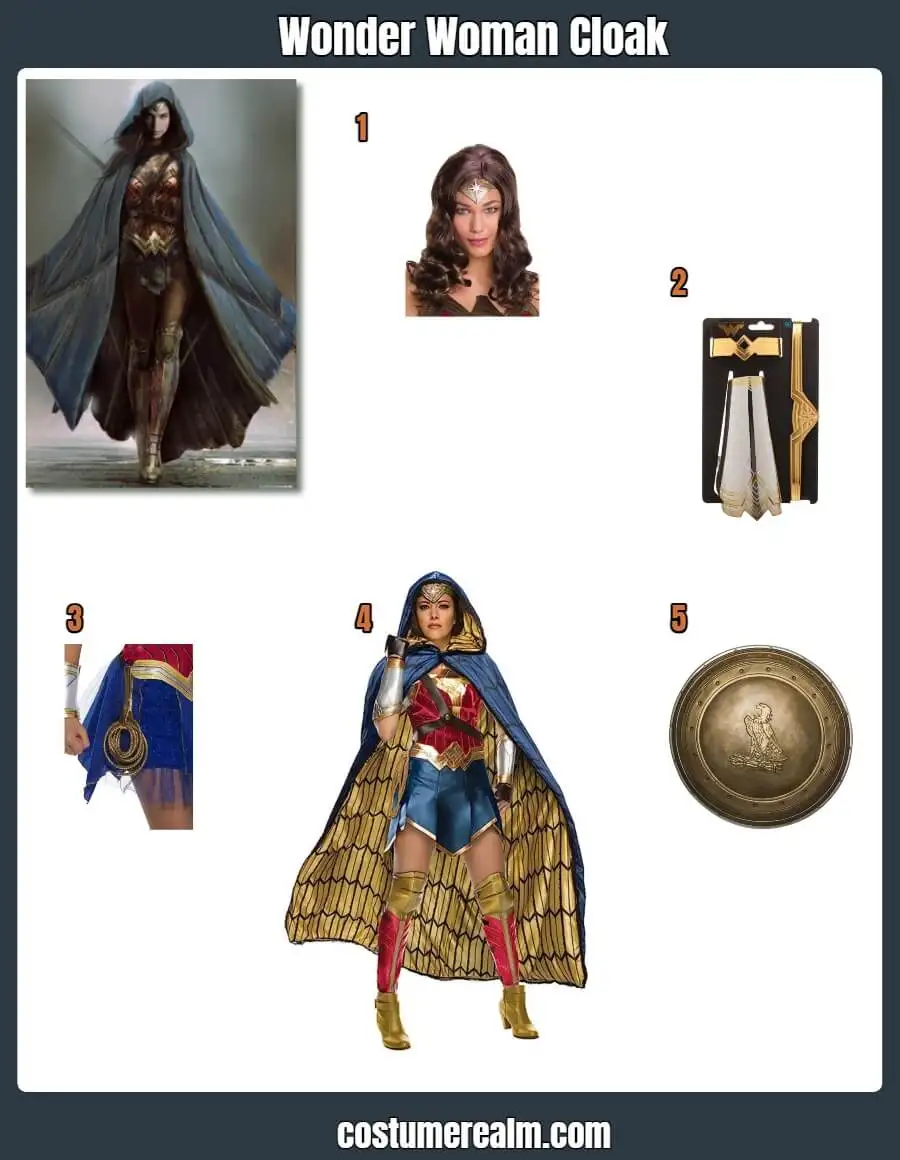
Five distinct versions of the most recognized female superhero in comics. One prop does most of the work at any of them.
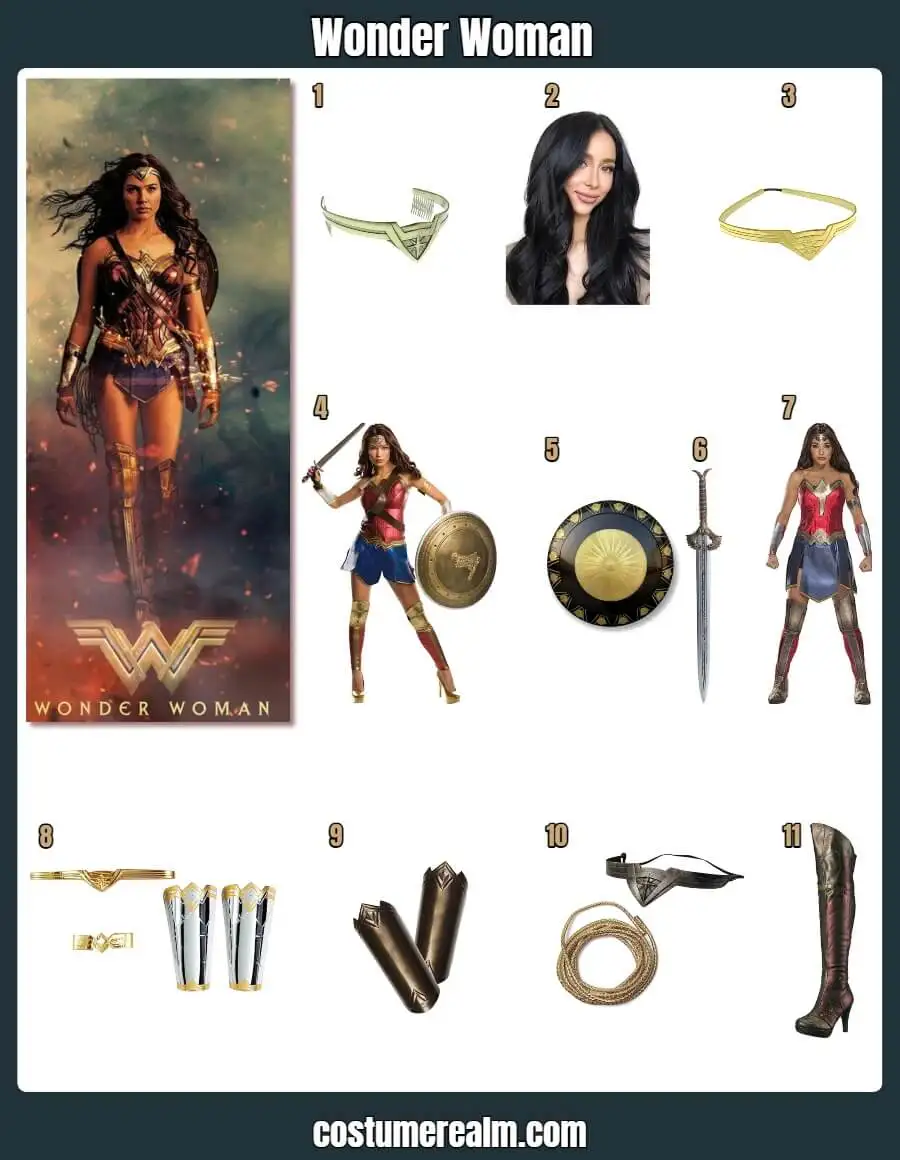
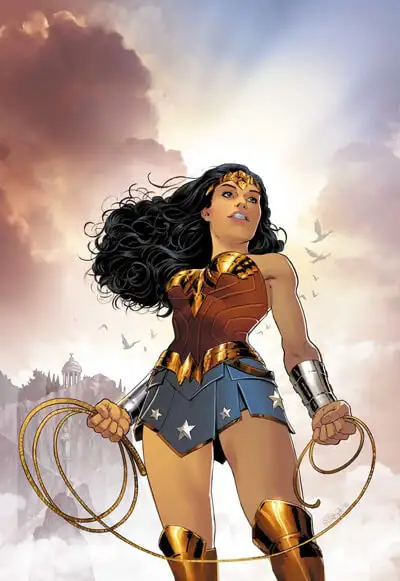
Diana Prince is an Amazonian warrior who fights for peace and has been doing so since her first comic appearance in 1941. The 2017 Patty Jenkins film starring Gal Gadot put her back at the center of popular culture, and that version is the one most people picture now. The tiara and the lasso are the two items that make any version of this costume immediately clear. Everything else is detail.
Affiliate links. We may earn a small commission at no extra cost to you.
The tiara is the first thing people see, and if it’s sliding sideways by the time you arrive, the whole costume looks like it’s already coming apart. Pin it before you leave. With five looks on this page, the tiara and the lasso are the two constants across all of them, and the tiara is the one that shifts. Bobby pins into the wig or your own hair, through the headband slot, before the cloak or anything else goes on. A tiara at a ten-degree angle does not read as Wonder Woman. It reads as someone who tried.
Diana is not someone who explains herself. She walks into a room like she expects people to move, because in the films, they do. At a party, this means you don’t hover by the door or apologize for the sword. You find a spot, you stand in it, and you hold the lasso with intention rather than wrapping it around your hand out of habit. If someone quotes the film at you, the correct response is a slow nod and nothing else. She never needed the last word. She had the lasso.
The Tiara Stays Where You Put It
Pin the tiara before anything else goes on your head. A headband base helps, but it still needs at least two bobby pins anchored into the wig or your actual hair. Skip this and the tiara rotates every time someone hugs you, every time you lean in to hear something, every time you move quickly. By 11pm you’ll be readjusting it every twenty minutes. Five seconds with bobby pins at home prevents that entirely.
Sword Versus Lasso: Pick One for the Night
Carrying both looks complete in photos. At an actual party, the sword catches on things, bumps into people, and ends up leaning against a wall somewhere within the first hour. The lasso clips to a belt or loops around the hip and stays out of the way. If you can only manage one prop through an actual crowded event, take the lasso. It’s the more recognized item anyway, and you won’t spend the night apologizing for accidentally hitting someone with a foam sword.
Strong Group
This is the most reliable group option. Every person is immediately recognized on their own, so the group works even if you get separated at the party. The visual contrast is good since each costume is distinct in color and silhouette. The one condition: Superman needs to commit to the full suit. A Clark Kent with glasses and an unbuttoned shirt standing next to Batman and Wonder Woman creates a clear hierarchy of effort that everyone will notice.
Strong Group
All four of these characters are widely recognized, and the costumes are visually distinct enough that the group reads clearly without needing a sign. Harley Quinn and Black Widow are the most costume-heavy builds. Captain Marvel and Wonder Woman are more straightforward. This works well precisely because none of these require the rest of the room to know they’re from the same franchise, because they’re not.
Conditional Group
This only works at a party full of people who follow film news closely enough to recognize Gal Gadot’s other roles on sight. The Bishop from Red Notice and Linnet from Death on the Nile will not land without explanation for most guests. Wonder Woman will land. The rest is a coin flip. I’d save this concept for a smaller group of actual film fans rather than a general party.
Conditional Group
The concept is clever, but it needs a card or something visual to communicate it, because the three Dianas do not have matching costumes or aesthetics. Princess Diana from The Crown, Diana Barry from Anne of Green Gables, and Diana Prince from Wonder Woman share a name and nothing else visually. This group works at a trivia night, not a Halloween party.
Niche Group
Half the party will recognize Thor and Wonder Woman. Zeus from Love and Thunder and Hades from the animated Hercules are more niche, and Loki is more “MCU fan” than “general party guest.” This group makes sense if everyone is a comic or mythology fan. Otherwise, expect to spend the night explaining who two of the five people are, which is not always worth the effort.
The tiara, cuffs, and lasso are worth buying as finished pieces since there’s no good DIY version that holds up for a full party night. The costume body is the one area where a full set purchase usually beats building from scratch, unless you own pieces already. The boots are worth checking your wardrobe before ordering anything.
Diana is calm, direct, and does not perform confidence. She doesn’t explain herself and she doesn’t ask for permission. At a party, the lasso is genuinely useful as a prop because it gives you something to hold and reference. Point it at someone who’s clearly lying about something. It gets a response every time without requiring you to deliver a monologue.
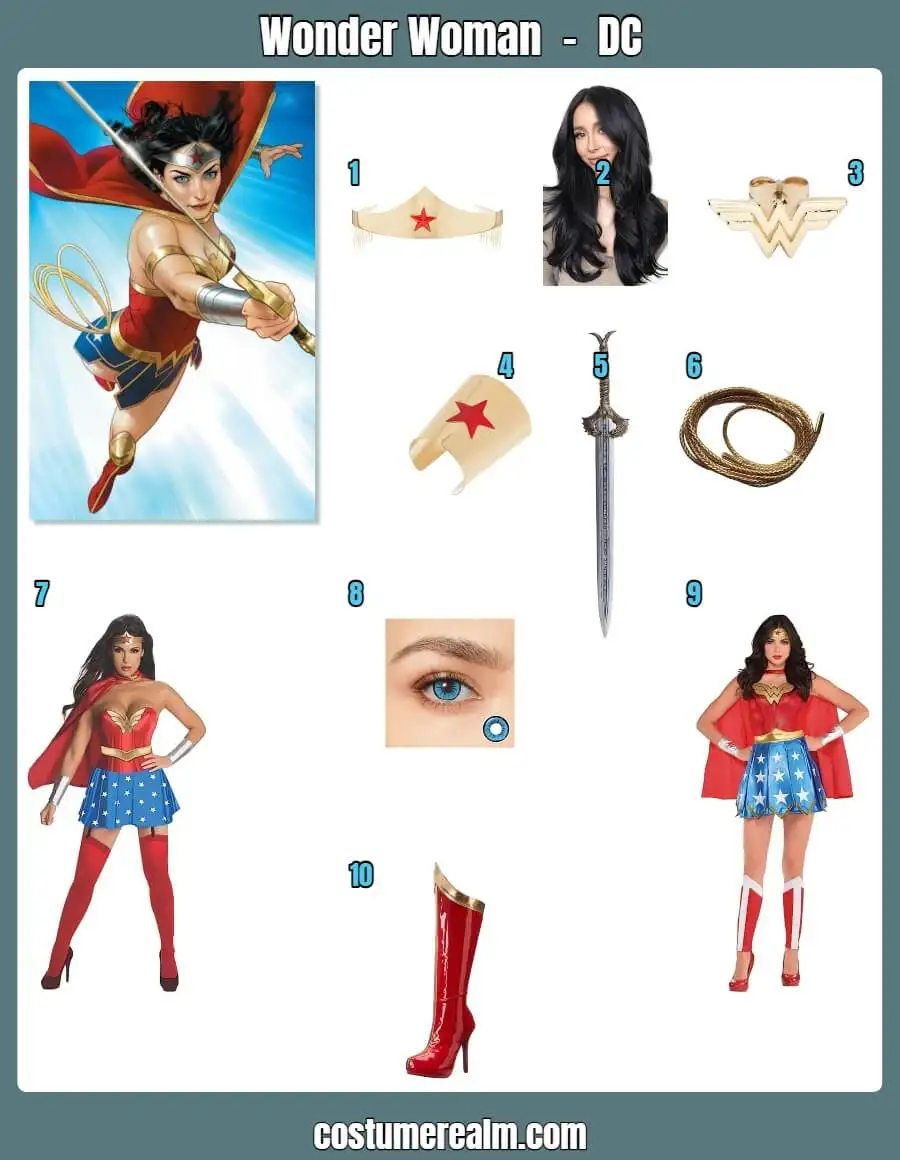
Pick one of the five looks on this page. For the most recognized version, go with the 2017 film look: full armor costume, gold tiara, silver arm cuffs, and the lasso clipped to your hip. The tiara and the lasso are the two items that make any version of this costume readable at a party. Everything else builds from there.
Three lines that get the most recognition:
The second one lands best at a party because it’s short and works as a response to almost anything.
Yes, and for a specific reason: the character appears across films, animated series, and comics that span multiple generations, so recognition is broad rather than tied to one release cycle. The 2017 Gal Gadot film gave the costume its current visual standard, and that version is still what most people picture when they hear the name. You won’t spend the evening explaining who you are.
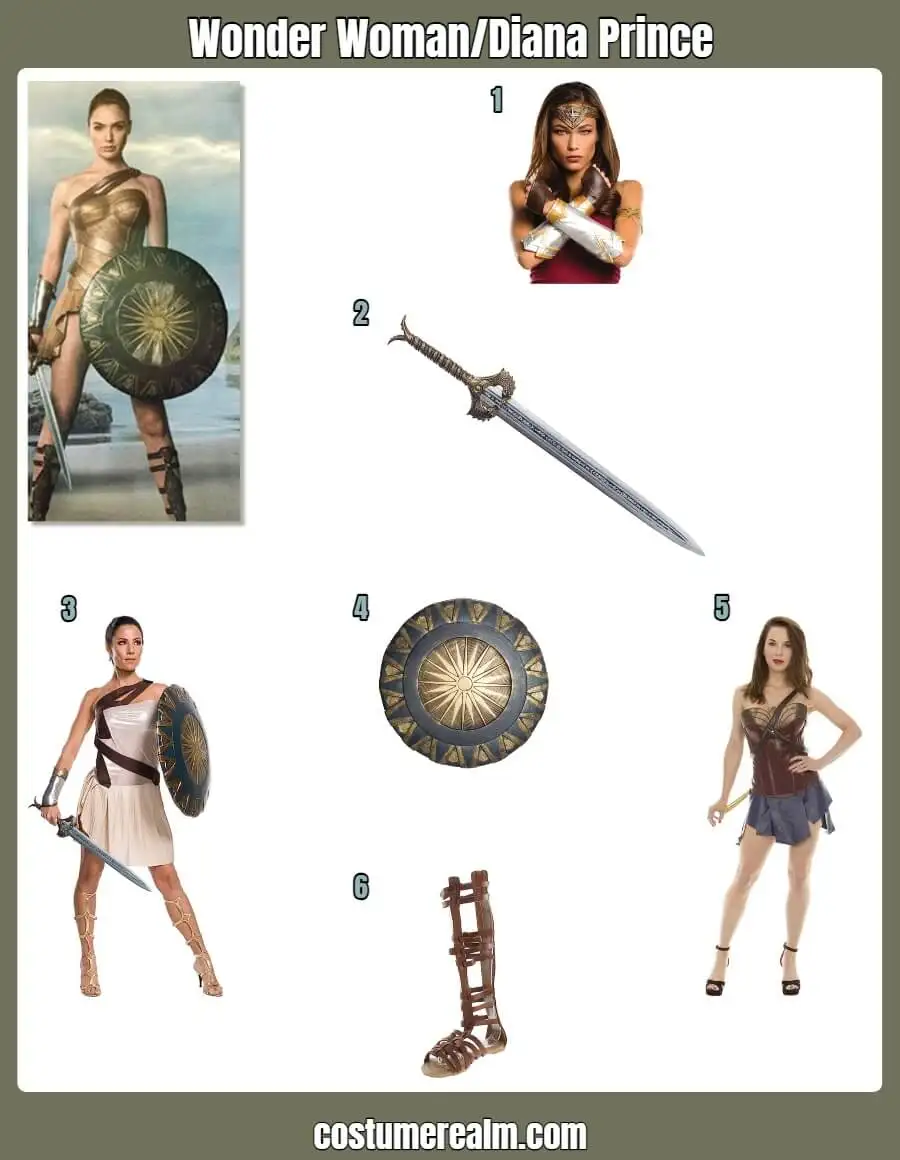
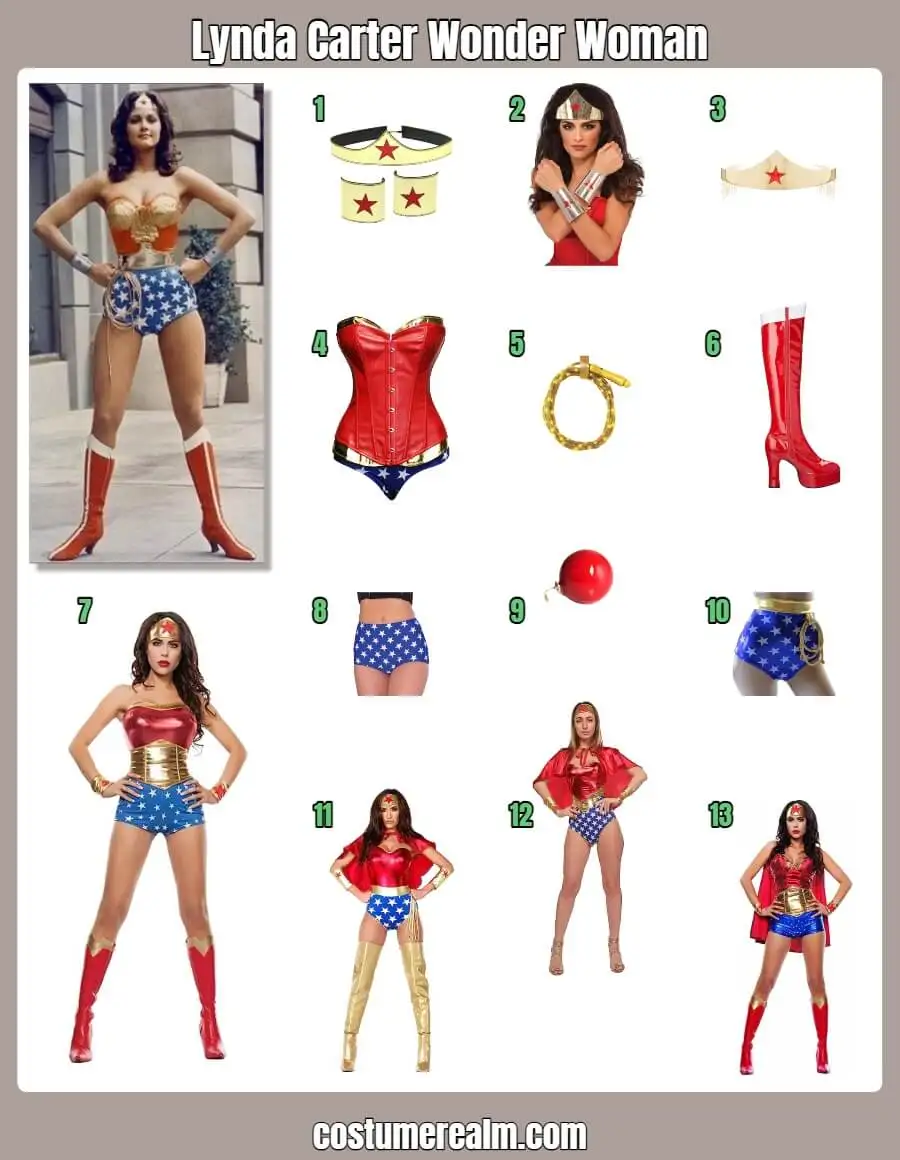
The 2017 film look is the simplest because full costume sets are widely available and cover most of the build in one purchase. The Diana Prince look requires more assembly. The Lynda Carter look is its own category and the right choice only if the TV series version is specifically what you want.
No. The lasso is the more recognizable prop and easier to carry through a real event. The sword is good for photos and annoying for everything else. If you want to bring it, bring it for the entrance and leave it somewhere safe. Don’t carry it all night.
The full costume sets run cheaper than buying accessories separately, so start there. The tiara is the one item worth prioritizing on any budget since it does the most recognition work. The lasso is inexpensive on its own if you already have a red or blue base. Check your wardrobe before ordering boots.
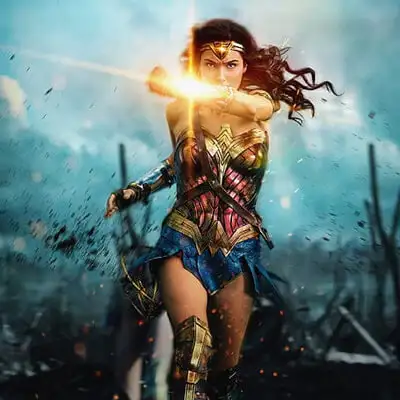
The 2017 look is the darker, more armored version from the World War One setting, with bronze and brown tones. The 1984 version from Wonder Woman 1984 is brighter, with a different chest plate design and more saturated gold. For Halloween recognition, the 2017 look is the more widely understood version. The 1984 look works, but fewer people will immediately place it.
Wonder Woman is Diana Prince, an Amazonian warrior princess created by William Moulton Marston for DC Comics in 1941. She has appeared in animated series, video games, and live-action films including the 2017 Patty Jenkins film starring Gal Gadot, which is the version most people reference now. She also appears in Justice League (2017), Batman v Superman: Dawn of Justice (2016), and Wonder Woman 1984 (2020). The character predates both the Marvel Cinematic Universe and most other superhero franchises by decades.